Wednesday, April 30, 2014

225 Years Ago Today - First Presidential Inauguration of His Excellency, George Washington


225 years ago today - 30 April 1789, George Washington was inaugurated as our Nation's first President on the steps of Federal Hall in New York City. In his First Inaugural Address, President Washington TWICE invoked God and asked for His divine guidance and blessings upon the new Nation:
"... Such being the impressions under which I have, in obedience to the public summons, repaired to the present station, it would be peculiarly improper to omit in this first official act my fervent supplications to that Almighty Being who rules over the universe, who presides in the councils of nations, and whose providential aids can supply every human defect, that His benediction may consecrate to the liberties and happiness of the people of the United States a Government instituted by themselves for these essential purposes, and may enable every instrument employed in its administration to execute with success the functions allotted to his charge. In tendering this homage to the Great Author of every public and private good, I assure myself that it expresses your sentiments not less than my own, nor those of my fellow-citizens at large less than either. No people can be bound to acknowledge and adore the Invisible Hand which conducts the affairs of men more than those of the United States. Every step by which they have advanced to the character of an independent nation seems to have been distinguished by some token of providential agency; and in the important revolution just accomplished in the system of their united government the tranquil deliberations and voluntary consent of so many distinct communities from which the event has resulted can not be compared with the means by which most governments have been established without some return of pious gratitude, along with an humble anticipation of the future blessings which the past seem to presage. These reflections, arising out of the present crisis, have forced themselves too strongly on my mind to be suppressed. You will join with me, I trust, in thinking that there are none under the influence of which the proceedings of a new and free government can more auspiciously commence...

"... Having thus imparted to you my sentiments as they have been awakened by the occasion which brings us together, I shall take my present leave; but not without resorting once more to the benign Parent of the Human Race in humble supplication that, since He has been pleased to favor the American people with opportunities for deliberating in perfect tranquillity, and dispositions for deciding with unparalleled unanimity on a form of government for the security of their union and the advancement of their happiness, so His divine blessing may be equally conspicuous in the enlarged views, the temperate consultations, and the wise measures on which the success of this Government must depend."


Previous Pro Ecclesia posts on this subject:
Happy 281st Birthday to the Father of Our Country, His Excellency George Washington

His Excellency, George Washington

Remember Remember the Fifth of November

In Honor of the Father of Our Country - His Excellency, George Washington

Bill Would Honor Washington and Lincoln Separately

The Conversion of George Washington

Labels: , , , ,

Tuesday, September 10, 2013

"We Have Met the Enemy and They Are Ours"

Perry's Victory on Lake Erie by Currier and Ives.

On this day 200 years ago - 10 September 1813, Master Commandant Oliver Hazard Perry, United States Navy, won a resounding victory over a British fleet near Put-in-Bay, Ohio, in the Battle of Lake Erie during the War of 1812:
At dawn on the morning of September 10, 1813, a lookout spotted six British vessels to the northwest of Put-in-Bay beyond Rattlesnake Island. Immediately Master Commandant Oliver Hazard Perry issued a flurry of orders and made preparations to sail forth to engage the British. 
 
Oliver Hazard Perry by Gilbert Stuart

With Perry's fleet on Lake Erie the British supply route from Fort Malden to Port Dover had been severed. The British had to either fight, or abandon Fort Malden. The British squadron consisted of six ships with sixty-three cannons, while the American flotilla comprised nine vessels and fifty-four guns. The British were armed with long guns that could throw a cannonball approximately one mile, accurately to about one-half mile. The American ships primarily armed with carronades had less than half the range of a long gun. The carronades could inflict much more damage at close range. Perry needed the wind to his back to close within carronade range.

When the squadron sailed from Put-in-Bay harbor at 7 a.m. the American vessels were steering west-northwest; the wind was blowing from the west-southwest. For more than two hours Perry repeatedly tacks his ships in an effort to put the wind to his back, but with no success. The frustrated Perry, conceded to mother nature at 10 a.m., issuing orders to turn his fleet in the opposite direction. But before the order could be executed the wind suddenly shifted and blew from the southeast, placing the wind directly behind the Americans.


Perry's opponent, Commander Robert Heriot Barclay, was an experienced Royal Navy officer who had fought with Lord Nelson at Trafalgar in 1805, and two years later he lost an arm fighting the French. Barclay's options did not alter when the wind shifted, so the Scotsman pointed his bow sprits to the westward, and hove to in line of battle.


With the wind at his back and the British battle line finally revealed, Perry made his own tactical adjustments. The Schooners Ariel and Scorpion were placed off the flagship's weather bow to engage the first British vessel and to prevent the enemy from raking his fleet. The Lawrence, a 20-gun brig serving as Perry's flagship, was third in line and would engage the Detroit, Barclay's 19-gun flagship. Next in line floated the Caledonia, a small brig with only three guns. Fifth in the American line of battle was the Niagara, Perry's other 20-gun brig and the Lawrence's sistership.


The Niagara, captained by Master Commandant Jesse Elliott, would engage the 17-gun Queen Charlotte, the second largest British ship. Lastly came the smaller schooners and sloop; these would engage the smaller British vessels.


Just before the engagement opened Perry hoisted his battle flag to the flagship's main truck. The large navy blue banner was emblazoned with the crudely inscribed words, "DONT GIVE UP THE SHIP". For his battle slogan Perry used the dying words of Captain James Lawrence, a friend of the commodore who was killed on June 1, 1813. Perry's flagship was named for the fallen Lawrence, and the dead hero's inspiring words clearly indicated Perry's determination to prevail.


Perry's Battle Flag, "Don't Give Up the Ship"
U.S. Naval Academy Museum, Annapolis, MD

[...]

By 2:30 p.m. the flagship was a floating wreck; every gun on her engaged side was disabled and four of every five men fit for duty were either killed or wounded. Perry was facing the dismal prospect of surrender.

Then, as he gazed across to the Niagara, still out of range and relatively undamaged, the commodore made a fateful decision. Collecting four unwounded men Perry manned the flagship's first cutter and rowed through a hail of shot to the Niagara. Miraculously Perry and his boat crew reached the Niagara unscathed.


Perry transfers (along with his battle flag) from the badly damaged flagship Lawrence to the unscathed Niagara.

[...]

The British, though they had pounded the Lawrence into a crippled hulk, had suffered terribly. During the engagement Barclay was severely wounded, plus the captain and first lieutenant of every British vessel was incapacitated. The English fleet was now commanded by junior officers - brave men, but with little or no experience maneuvering ships in the chaos of combat. When they observed the Niagara bearing down on their line the British attempted to wear ship - to turn their vessels around to bring the unused starboard broadsides to bear. Orders were issued, but amidst the tumult of battle the battered Detroit and Queen Charlotte collided, becoming helplessly entangled.


Taking full advantage of the enemy blunder, Perry steered the Niagara through the jumbled British battle line. Unleashing both broadsides, the American commodore ravaged the vulnerable British ships. As the Niagara pressed through the British line Perry backed the maintop sail, holding the Niagara stationary while her belching carronades decimated the enemy decks. The wind had also picked up by this time, allowing the sluggish gunboats to rush forward and rake the enemy from astern.


A few minutes after 3 p.m. the British bowed to the inevitable, the four largest vessels surrendering one by one. The gunboats Chippawa and Little Belt sheered off and tried to escape, but they were tracked down and snared by the Scorpion and Trippe. The entire British fleet had been captured.

The vessels anchored and hasty repairs were underway near West Sister Island when Perry composed his now famous message to William Henry Harrison. Scrawled in pencil on the back of an old envelope, Perry wrote, "Dear General: We have met the enemy and they are ours. Two ships, two brigs, one schooner and one sloop. Yours with great respect and esteem, O.H. Perry".


The Battle of Lake Erie proved one of the most resounding triumphs of the War of 1812. The victory secured control of the lake, forcing the British to abandon Fort Malden and retreat up the Thames River. Harrison's army pursued, decisively defeating the small British army and its allied Indian force on October 5, 1813 at the Battle of the Thames. And later, during the peace talks, the dual victories of Lake Erie and the Thames insured that the states of Ohio and Michigan would remain the sovereign territory of the United States of America.
 
 Perry's Victory and International Peace Memorial and a modern replica of the Flagship Niagara at Put-in-Bay, Ohio, during the Battle of Lake Erie Bicentennial celebrations over Labor Day weekend.


The blogger at Put-in-Bay for the Battle of Lake Erie Bicentennial, wearing his "Don't Give Up the Ship" battle flag tie from Buffalo Jackson Trading Co.

Don't Give Up the Ship!


Additional Online Resources:
Fort Meigs: Ohio's War of 1812 Battlefield
Tecumseh

Recommended Books:
A Signal Victory: The Lake Erie Campaign, 1812-1813 by David Curtis Skaggs and Gerard T. Altoff
Perry's Lake Erie Fleet: After the Glory (PA) (The History Press)
 

Labels: , , , , , , ,

Sunday, August 11, 2013

William P. Clark, R.I.P.

William P. Clark, Ronald Reagan's closest advisor, passed away yesterday. It's quite possible that you've never heard of Judge Clark, but he just so happens to be one of the chief architects of Reagan's vision for the downfall of Soviet communism, and played a key role in implementing that plan.

The following excerpt is from an interview Ignatius Insight did a few years ago with Paul Kengor, Clark's biographer (his book is The Judge: William P. Clark, Ronald Reagan's Top Hand):
... Clark helped set up that initial and historic June 1982 meeting between President Reagan and Pope John Paul II, where the two men confided in one another that they believed that God had spared their lives for a special purpose, which they concluded was to undermine Soviet communism, beginning particularly in Poland, which both men—as well as Clark—saw as the wedge that could crack the entire Communist Bloc.

Over the next year and a half that followed, Clark became the primary White House conduit to the Vatican. Along with CIA director Bill Casey, another committed Catholic, Clark met very frequently with Pio Laghi, the apostolic delegate to Washington. He and Casey had code language when discussing over the telephone the need for a quick meeting with Laghi: "It's time to get some cappuccino," they would say. That meant a visit to Laghi's residence for a cappuccino and to share information about the critical activities going on around the world, especially in Poland. They were the middle men between Reagan and Pope John Paul II, the principal liaisons. Clark was the point man who would then report that information directly back to Reagan...
Kathryn Jean Lopez's tribute to Judge Clark at National Review is definitely worth a read.

Requiescat in pace, Judge Clark.

Labels: , , , , ,

Friday, March 01, 2013

Society of Cincinnati Medal Belonging to Polish-Born Hero of American Revolution to be Auctioned in Cleveland


General Thaddeus Kosciuszko was a Polish-born hero of the American Revolution and the Chief Engineer of West Point. In Cleveland next Wednesday, there will be an auction of Kosciuszko's Society of Cincinnati medal.

Lot 156


Enameled Gold Order of the Society of the Cincinnati,

Enameled Gold Order of the Society of the Cincinnati, Designed by Major Pierre L'Enfant and Construction Attributed to Duval & Francastle, Paris, 1784. One of only 140 original eagles designed and conceived by Major Pierre L'Enfant for the inaugural members of the Society of the Cincinnati, the nation's oldest patriotic organization. The Society was founded in 1783 by officers of the Continental Army and their French counterparts who served together in the American Revolution. This particular eagle is believed to have belonged to Thaddeus Kosciuszko, a Polish-born hero of the Revolution and Chief Engineer of West Point. In 1783, Kosciuszko was appointed Brigadier General and initiated into the Order by General George Washington, Commander-in-Chief of the Continental Army.

Gold insignia with eagle and wreath motif, both sides with head and tail feathers having white and black enamel, red enamel eyes, distinct eyebrows and black beaks. Obverse oval medallion showing Cincinnatus receiving a sword from two senators, originally with blue enamel sky and green enamel grass within inscription OMNIA. REINQT. SERVAT. REMPB. (He Forsook All Things to Serve the Republic), but now mostly lacking. Reverse medallion showing Cincinnatus with sun and palisade behind, originally with blue sky and green field enameling within inscription in black on white ground VIRT. PRAEM. SOCI. CIN. RUM. INST. A. D. 1783 (a Prize for Virtue - Society of the Cincinnati Instituted 1783), also mostly lacking. The wreath at top and lower crossed branches likewise originally decorated with green enamel and red berries, with double oval loop suspension ring. Without original blue and white ribbon and bow.

Provenance: Inherited by the consignor through direct descent of Stevens Thompson Mason (1760-1803), a U.S. Senator from Virginia, and his wife, Mary Elizabeth Armistead (1760-1825), who were personally acquainted with Kosciuszko. According to family history, Kosciuszko was awarded the eagle, which he then gifted to Mary Elizabeth Armistead, for whom he had great affection. It has been passed down in the Mason family ever since. Kosciuszko biographer, Casimir Kajencki, references a documented meeting between Stevens Thomson Mason and Kosciuszko at the latter's apartment on Third Street South in Philadelphia over the winter of 1797-1798 (Thaddeus Kosciuszko: Military Engineer of the American Revolution, El Paso, Tex.: Southwest Polonia Press, 1998, pp. 202-203). Thaddeus Kosciuszko (1746-1817), to his friend Mary Elizabeth Armistead Mason (1760-1825), to her grandson Stevens Thomson Mason (1811-1843), to his sister Catherine Armistead Mason (Rowland) (1818-1884), to her son John Thomson Mason (1844-1901), to his son Stevens Thomson Mason (1880-1950), to his daughter Adelaide Houghton Mason (b. 1918), by descent to the present owner

Dimensions: h: 2.5 x w: 1 inch.

A few years ago, George Washington's Society of Cincinnati medal, which had been in the possession of the family of the Marquis de Lafayette (the medal had been a gift to Lafayette by Washington's adopted granddaughter, Nellie Lewis), sold for over $5.3 million.

The Society of Cincinnati is America's oldest patriotic organization, and was established by Major General Henry Knox in honor of George Washington. The Society took its name from Lucius Quinctius Cincinnatus, the ancient Roman who left his farm to accept dictatorial powers during a war emergency, only to relinquish those powers and return to farming when the war was over.


Labels: , , ,

Friday, February 22, 2013

Happy 281st Birthday to the Father of Our Country, His Excellency George Washington


This life-size statue of George Washington in the rotunda of the Virginia State Capitol in Richmond, Virginia, is probably the finest and most accurate likeness of Washington ever made. It was sculpted by Jean-Antoine Houdon from measurements and life masks he took of Washington when the sculptor visited Mount Vernon.

Labels: , , , , ,

Monday, May 07, 2012

Save America. Vote Virgil Goode for President.

Labels: , , , ,

Friday, August 05, 2011

When President Obama Rated His First Term Thus Far as a "Solid B+" ...

... he was apparently referring to America's bond rating under his leadership.

Labels: , , ,

Friday, July 01, 2011

It's Fourth of July Weekend

Some modern songs about the 4th of July to help you enjoy the weekend:


Labels: , ,

Thursday, June 30, 2011

Music Recommendations: Some Revolutionary Sounds for the 4th of July

(Originally posted July 2, 2008, and updated June 30, 2011)

If you're tired of hearing the same old Sousa/Copeland/Berlin-as-performed-by-the-Boston Pops/National Symphony fare that is generally offered up on the 4th of July (and I won't even mention the more cheezy patriotic offerings that have come out within the last 30 years), I have some CD recommendations that will go a long way toward curing what musically ails you.

First up is Liberty Tree by The Boston Camerata.
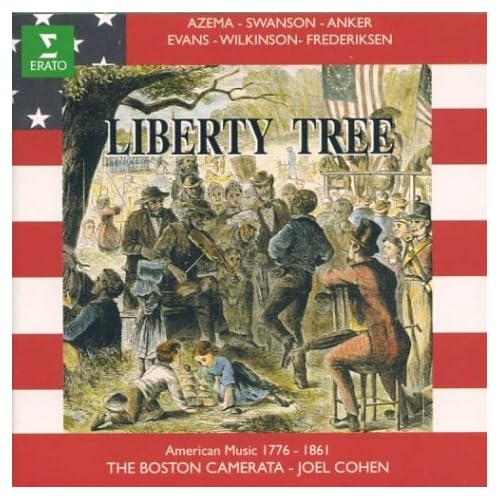
The Boston Camerata are favorites of mine whenever it comes to early music. And this selection of early American music is no exception. From the program notes:
Our view of the American past is shaped by many things -- dimly remembered history lessons from our earliest school days; the posturings of present-day public people; and, perhaps most importantly, by the popular media -- radio, television, and the movies. Talk about static! Can we ever, then, experience our collective past as it "really" was? Hardly -- those days are gone forever. But, on the other hand, can we get closer to our roots than heretofore? Can we eliminate some of the distortion and noise? At least as far as music goes, I am convinced that a cleaner, truer approach is possible.

The partsongs, marches, anthems, jigs, and ballads we perform for you here were all part of American life during the early decades of the country's existence: between the founding of the Republic and the Civil War. This, the everyday music of villages and towns, represents a hybrid tradition. Notated and harmonised in a rough, pragmatic way by musicians of the time, these pieces are not learned or complex enough to be taken seriously as "high" art by most music historians. Yet, since they managed nonetheless to make their way onto paper and into "polite" society, they are surely a bit more refined and worldy-wise than the folk song of the truly rural settlers. It is in this neglected, between-two-worlds repertoire, I maintain, that we can find much of the soul of early America.

A few of our works have retained popularity since those earlest times; some tunes, once secular "hits", now survive, spiritualised, in the still-vital shapenote hymn tradition. But many of these pieces, once beloved in their day, have not been heard in generations, and have been transcribed and edited specially for this recording from original sources.

You will hear in our performances the kinds of musical instruments that were played a century and a half ago; softer and more rounded in tone than their modern counterparts. Though we don't know with any certainty how "art" music may have been sung in nineteenth-century America, the timbres of the musical instruments provide important parallel clues as to how the human voice may have sounded before the age of roaring tenors and the Boeing 747.

The result? You will experience a lighter, less aggresive tonal pallette than the one we tend to associate with patriotic fervour, or with history with a capital H. Yankee Doodle can be heard as the perky, disrespectful teenage piece it originally was. On the Road to Boston makes one visualise the road, perhaps the old one from Quincy and Dorchester; much narrower than the commuter-clogged Southeast Expressway, unpaved, with horse and foot traffic only -- and no billboards. And the untutored harmonies in a piece like Clovergreen give a truer, sharper sense of life on the (cultural) frontier than the sugary sweetness of the same tune played b y saxophones (as Auld Lang Syne) on New Year's Eve from coast to coast. True it is that we can't go back to those places, but fragments of what they once were do illumine and enrich our contemporary imagination.


[More]
Program includes:

I. Liberty Tree
1 Yankee Doodle 2'56
2 Chester 2'11
3 Liberty Tree 2'34
4 The Boston March 1'11
5 David's Lamentation 1'45
6 Jefferson and Liberty 2'39
7 Rights of Woman 1'12
8 The Appletree 1'12

II. Dormant
9 Dormant 2'29
10 Hero and Leander 2'13
11 Mary's dream 3'59

III. Jolly Soldier
12 On the Road to Boston 0'49
13 Jolly Soldier 3'23
14 Jefferson and Liberty 1'03
15 Abraham's Daughter 2'19
16 Brave Wolfe 4'49
17 Irish air 1'22
18 The Blue Bells of Scotland 2'00

IV. The Working Boy
19 The Working boy 2'03
20 Poor old Maids 0'57
21 Bob in the Bed 0'32
22 Old Tare River 1'53
23 The Rose Tree (The Knoxville Harmony) 2'06

V. Parting Friends
24 Clovergreen 3'41
25 Parting Friends 3'46
26 Ode to Science


Other outstanding offerings by The Boston Camerata in this genre (although focusing more on Early American folk hymnody), and well-deserving of a listen, include:

Trav'ling Home - American Spirituals 1770-1870

Program includes:

1. Hatfield
2. Invocation
3. The Pilgrims
4. Ballon
5. Richmond
6. Harvest Hymn
7. Calvary
8. Pennsylvania
9. While Angels Strike
10. Cusseta
11. Confidence
12. Something New
13. The Young Convert
14. Scots, Wha Ha'e
15. Bruce's Address
16. Saw You My Hero
17. Crucifixion
18. Fare Well Ye Green Fields
19. Greenfields
20. Prince William's March
21. The Paralytic
22. The Three Gypsies
23. Christian Race
24. Liberty
25. Ontario
26. Scotland
27. Warren
28. Weeping Pilgrim

(Program Notes and reviews can be read here)


The American Vocalist - Spirituals and Folk Hymns, 1850-1870

Program includes:

I. The Warning
1. Warning, spiritual
2. Windham, folk song
3. Judgement Day, spiritual
4. Greenwich, folk hymn
II. Great Comforter, descend
5. Wrestle, spiritual
6. Canterbury New Spiritual
7. Edom Spiritual
8. I Shall Be Satisfied, spiritual
III. The Star of Bethlehem
9. Milford, folk song
10. Star in the East (Council of Southern Mountain Workers' Songs of All Times, 1945)
11. Bonnie Doon, folk hymn
IV. The Gospel Feast:
12. O Come, Come Away, spiritual
13. School Hymn, folk hymn
14. Gospel Feast, folk hymn
15. Go Worship At Emmanuel's Feet, folk hymn
16. John Anderson, My Jo
17. Go When the Morning Shineth, spiritual
18. Captain Robert Kidd, folk song
19. How Precious Is the Name?, folk hymn
20. Roll Call, folk hymn
21. Glad Tidings, folk hymn
V. At the River
22. Deal Gently with Thy Servants, spiritual
23. Shall We Gather At the River?, folk hymn
24. Happy Land, folk hymn
25. Burst Ye Emerald Gates, folk hymn

(Program Notes and reviews can be read here)


New Britain - The Roots of American Folksong

Program includes:

I. Prélude
Anonymous (Southern Europe, 10th c.) -- Judicii Signum; The Sacred Harp (Philadelphia,1860) -- The Great Day; Provence, ca. 1200 -- Kalenda Maya; New Mexico, 1953 -- Cuando por el oriente
II. Old and New France/Vielle France et Nouvelle France
Québec, 1914 -- Rossignolet du bois joli; Borlet, ca. 1400 -- Rossignolet del bos jolin; Québec, 1914 -- Dans Paris y-a-t-un'barbière; Loyset Compère, ca. 1500 -- Allons nous faire faire la barbe; Québec, 1914 -- Mon père m'a mariée; Anonymous, ca. 1500 -- Mon père m'a mariée; Canada, ca. 1900 -- Gabriel Nazareth (sung in Huron); Jean Planson, 1587-- Unenymphe jolie; Québec, 1914-- C'est en passant par Varennes; Jacob Arcadelt, ca. 1568-- Margot labourés les vignes; Jean Baptiste Besard, 1603-- Bransles de village; Québec, 1914 -- Il était une cendrillon; Québec,1914-- C'est dans la ville de Bytown;
III. Wandering songs and Ballads/Chansons et ballades errantes
France, ca. 1475 -- Il est venu le petit oysillon; Germany, 1619 -- An jenem Tag, nach Davids sag; England, 1859 -- Barbara Allen; Tennessee, 1937 -- Barbara Allen; Georgia, 1855 -- Heavenly Dove ; Virginia, 1931 -- Chevy Chase ; England, ca. 1550-- The Kinges hunt is upp ; England, ca. 1590-- The English hunt's up ; Scotland, ca. 1650 -- My love gave me a cherry ; Nova Scotia, 1950 -- I gave my love a cherry ; Thomas Ravenscroft, 1611-- Hey ho, nobody at home ; Texas, 1950 -- There were three crows ; Thomas Ravenscroft, 1611 -- There were three ravens ; Scotland, ca. 1620-- Lady Cassilles Lilt ; Ohio, 1925 -- Gipsy Davy ; Scotland, 1790 -- The Jolly Beggar ; Taunton, Massachusetts, 1934-- Billy Boy ; Northern England, ca. 1920 -- Billy Boy ; Diego Ortiz, 1654 -- Ricercada premera ; North Carolina, 1916 - Betty Anne
IV. Singing School Folk Polyphony in the US/Polyphonie populaire aux Etats-Unis
The Social Harp (Georgia, 1855) -- Singing School ; William Billings (Boston, 1794) -- Thomas-Town ; The Sacred Harp (Philadelphia, 1860) -- New Britain (Amazing Grace) ; The Social Harp -- Parting Friends The Social Harp -- Hallelujah

(Program Notes and reviews can be read here)

_______________

Next up is Liberty! by fiddler Mark O'Connor (with Yo-Yo Ma, Wynton Marsalis, and James Taylor).
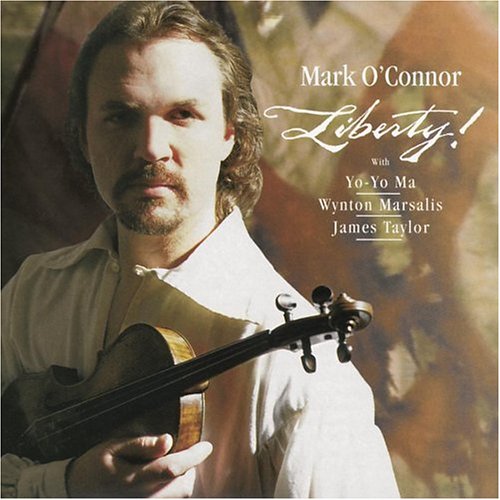

This is the soundtrack from the excellent PBS series Liberty! The American Revolution. Here's a description of the recording from the PBS website:
The music for LIBERTY! The American Revolution features arrangements of traditional Revolutionary-era folk melodies by Mark O'Connor, as well as original compositions by Richard Einhorn and O'Connor. O'Connor, a Grammy Award-winning violinist, performs, along with: Grammy Award-winning cellist Yo-Yo Ma; Pulitizer Prize-winning composer and trumpet player Wynton Marsalis; David and Ginger Hildebrand; and the Nashville Symphony. O'Connor's "Song of the Liberty Bell" is the series' main theme. James Taylor and O'Connor perform the traditional song, "Johnny Has Gone for a Soldier," over the closing credits... American music of the revolutionary era drew upon the cultural influences of the people of the new nation - English, Scottish, Irish, German and African - and blended into a sound of its own. Through the interest and involvement of a remarkable collection of artists, that music has been recreated for LIBERTY! in a memorable soundtrack and score, from Sony Classical.
Program includes:

1. Song Of The Liberty Bell
2. Johnny Has Gone For A Soldier
3. Surrender The Sword
4. Soldier's Joy
5. When Bidden To The Wake Or Fair
6. The World Turned Upside Down
7. Bunker Hill
8. Freedom
9. The Flowers Of Edinburgh
10. Brave Wolfe
11. Devil's Dream
12. Song Of The Liberty Bell

_______________

My third recommendation is a CD that I purchased a few years ago (and have practically worn out listening to in the intervening years) called Davy Crockett's Fiddle by Colonial Williamsburg musician Dean Shostak. It is definitely my favorite of the bunch and a MUST OWN for anyone interested in early American music.
This recording features the fiddle that purportedly belonged to Davy Crockett. All the instruments and music on this CD are from the time of Davy Crockett (1786-1836). From the program notes:
I first learned about Davy Crockett's fiddle when I saw its picture in the April 2001 issue of USAToday; an old well-worn violin. That was the beginning of a wonderful musical adventure. I contacted the good folks at the Witte Museum, who owned the fiddle, and proposed that we have it restored. I wanted to make a recording of music of Davy Crockett's time on his very own fiddle accompanied by period instruments.

They enthusiastically agreed, and we embarked on an remarkable historical journey; restoring the violin, researching and learning the music Davy Crockett would have played, and recording it right in San Antonio where he spent his final, heroic days.

When I returned to Williamsburg, VA, I assembled some of my favorite early American musicians together to create musical scenes from Davy's life using his own fiddle...
Program includes:

1. Perry's Victory
2. Yankee Doodle
3. Amazing Grace
4. Speed The Plow
5. Hunters of Kentucky
6. Shenandoah
7. Turkey In The Straw
8. Haste To The Wedding
9. German Waltz
10. The President's March (Hail Columbia)
11. Home Sweet Home
12. Durang's Hornpipe / College Hornpipe
13. Jefferson And Liberty
14. Soldier's Joy / Bonaparte's Retreat
15. Duke of Kent Waltz
16. Cindy
17. The Girl I Left Behind Me / Leather Breeches
18. Rock of Ages
19. Drink To Me Only With Thine Eyes
20. Star Spangled Banner
21. The Legend Of Davy Crockett

_______________

My final reccomendation is The World Turned Upside Down by Barry Phillips and Friends.
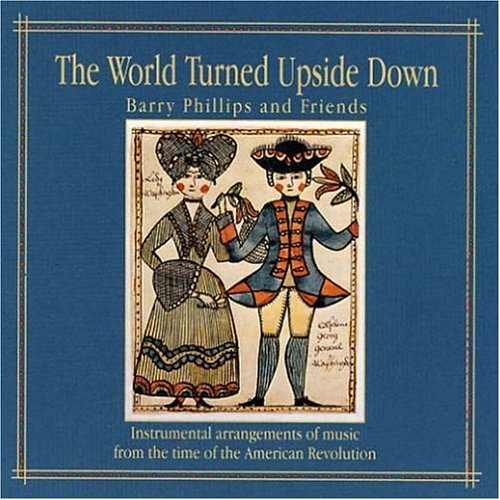

Of my recommendations, I've owned this recording the longest - I bought it on cassette tape many years ago (while I was still in law school), and purchased it again on CD a few years ago. The title of the recording refers to the tune that tradition says the surrendering British troops played as they paraded by the victorious Continental and French Armies at Yorktown during the American Revolution - the tune is also known as the Cavalier (and later, Jacobite) ballad "When the King Enjoys His Own Again". (It's also the tune to which Sarah marched down the aisle at our wedding.)

Here's more about the recording:
Barry Phillips and Friends explore the colorful variety of music popular in late 18th and early 19th century America, from elegant Colonial drawing rooms to homely frontier hearths to rollicking waterside taverns. The title tune, according to legend, was played by Cornwallis' surrendering troops at Yorktown; the album also includes dances and folk songs (All The Pretty Little Horses, Rights of Man, Fisher's Hornpipe, Love in a Village) along with a suite of early American classical music by the Boston master William Billings. As always, liner notes provide colorful background history of the music and the times.
Go here for the complete liner notes. Program includes:

1. The World Turned Upside Down 2:42
2. Love in a Village / Love Forever 3:05
3. The Rights of Man 3:20
4. When Jesus Wept 3:46 (by William Billings)
5. Billings Suite 3:48 (by William Billings)
6. Dutchess of Brunswick 2:21 (Traditional)
7. Young Widow/Black Joke 2:22
8. New German Spa 3:59
9. All The Pretty Little Horses 3:13 (Traditional)
10. Sweet Richard 4:07
11. Fisher's Hornpipe / Patterson's Hornpipe 4:55 (by James A. Fisher)
12. Rights of Conscience 4:19 (by Issachar Bates)

_______________

Whether you're a history buff, a fan of early American music, or just want something different to listen to on Independence Day, I HIGHLY RECOMMEND ALL of these recordings.

And, finally, there are two more recordings that I'd like to mention, which I do not own, but which look promising. The first is titled Music of the American Revolution: The Birth of Liberty. This recording appears to cover some of the same ground as the recordings I've listed above, but is limited only to music of the American Revolution. Could be worth checking out. And the second one is 4th of July Concert by the Fifes and Drums of Colonnial Williamsburg. Although I do not own this recording, I was actually in attendance at this particular 4th of July concert in Colonial Williamsburg, and can recommend it on that basis alone.

Labels: , ,

Wednesday, June 29, 2011

4th of July Film Recommendations


There are several fine documentary miniseries that I recommend for the 4th of July. In fact, I recommend skipping the Hollywood versions of history altogether and watching these documentaries instead:

The American Revolution (A&E / History Channel)
http://www.amazon.com/American-Revolution-History-Channel/dp/B0007TKNOC/ref=cm_lmf_tit_16_rdssss0
(this is my personal favorite)

Liberty – The American Revolution (PBS)
http://www.amazon.com/Liberty-The-American-Revolution/dp/B000BITU3E/ref=cm_lmf_tit_14_rdssss0

The History Channel Presents The Revolution
http://www.amazon.com/History-Channel-Presents-Revolution/dp/B000IB0DD0/ref=cm_lmf_tit_1_rdssss0

Rebels & Redcoats – How Britain Lost America (PBS)
http://www.amazon.com/Rebels-Redcoats-Britain-Lost-America/dp/B0001ZWLVA/ref=cm_lmf_tit_17_rdssss0

Founding Fathers (History Channel)
http://www.amazon.com/Founding-Fathers-Keith-Arbour/dp/B00004ZETI/ref=cm_lmf_tit_19_rdssss0

Founding Brothers
http://www.amazon.com/Founding-Brothers-Peter-Coyote/dp/B0000687BM/ref=pd_bxgy_d_img_b

The History Channel Presents Washington the Warrior
http://www.amazon.com/History-Channel-Presents-Washington-Warrior/dp/B000G1R402/ref=cm_lmf_tit_20_rdssss0

To save yourself some money, I HIGHLY RECOMMEND that you purchase the History Channel's "The Founding of America" Megaset, which includes many of the offerings I mention above and several other outstanding movies and documentaries.

Contents Include:
  • Founding Fathers (mini-series)
  • Founding Brothers (mini-series)
  • The Conflict Ignites
  • 1776
  • Washington & Arnold
  • The World at War
  • England's Last Chance
  • Birth of the Republic
  • The Revolution (series)
  • Washington the Warrior
  • Ben Franklin
  • Benedict Arnold: A Question of Honor
  • The Crossing


  • Bonus Features:
  • "History in the Making: The Revolution"
  • Behind-the-Scenes Featurettes; Behind-the-Scenes
  • "Declaration of Independence" (Episode of SAVE OUR HISTORY)
  • "The Many Faces of Ben Franklin" Making-of Featurette
  • Timeline
  • Anecdotes
  • Quotes
  • List of Innovations and Inventions
  • "Benedict Arnold: Triumph and Treason" (50-minute Biography episode); Cast
  • Biographies/Filmographies
  • Historical Quotes


  • At $44.98, which is what Amazon.com is offering it for, this Megaset is an absolute STEAL! It can be purchased even cheaper - as low as $29.98 - from the Amazon Marketplace. I was fortunate enough to buy this set last year for $19.98! It is money well spent for the content you're getting.

    If you simply MUST watch a movie about the Revolutionary War, then HBO's "John Adams" is the best thing out there on the subject. A sentimental favorite of mine in this genre is the 1972 musical, "1776". I also recommend the A&E movie "The Crossing", which depicts the dramatic events surrounding Washington's late-1776 crossing of the Delaware and subsequent victories at Trenton and Princeton - this movie is included in the "The Founding of America" Megaset. Of course, there's also the old Disney favorite, "Johnny Tremain".

    Finally, you may want to consult the list of Rev War movies for the 4th that my friend Don McClarey put together a couple of years ago.

    Coming tomorrow: My annual music recommendations for the 4th of July.

    Labels: , , ,

    Thursday, April 28, 2011

    I Don't See Myself Blogging on This Topic Across Five Aprils


    I suppose I shouldn't let April pass without making at least one comment on the 150th anniversary of the War Between the States. This will probably be it, though. The great conflagration that took over 600,000 lives just isn't really my cup of tea when it comes to American history. I find the entire topic to be altogether depressing. I'll never forget leaving Gettysburg completely overtaken by melancholy - a feeling of depression that didn't leave me for days.

    If you really want some excellent commentary on the War, generally with some great insights from a Catholic perspective, then I recommend you follow the posts on the subject by my friend Don McClarey at The American Catholic.

    For my part, I will just leave it at my general philosophy about the conflict between North and South:

    I am, by virtue of having spent most of my life in those states, both a Texan and a Virginian, although I am now exiled to the land of Grant and Sherman. Nevertheless, I would like to think that, had I lived back then, I would have opposed secession. But once the decision was made, my loyalty would have been to my home states.

    Of course, slavery and secession were unjustifiable blights on America's history. But, in my view, so was Lincoln's decision to make war against the populations of those states once they decided they no longer wished to be associated with the Union. There is nothing sacrosanct about an America undivided, and such an exalted notion does not justify making war against the populations of the Southern states.

    I do not deny (nor am I proud of) the fact that the Southern states seceded to preserve the systematic enslavement of their fellow man. But I DO deny that the average Confederate soldier (or even General Lee and General Jackson, for that matter) was fighting for the preservation of slavery - they were fighting because what they considered their "country" (i.e. the states of their birth) had been invaded.

    Labels: , , ,

    Tuesday, November 23, 2010

    The First Thanksgiving

    (Originally posted 24 November 2009)


    The "First" Thanksgiving at Plymouth, MA, in 1621

    Every gradeschool boy and girl in the U.S. will confidently tell you that their history books say that the very first Thanksgiving on American soil took place in Plymouth, Massachusetts in 1621 when the English Pilgrims who had arrived the year before and the Patuxet Indians shared the food from their respective harvests in one great big happy feast.

    As is often the case, however, the history books are wrong on this account.

    The "First" Thanksgiving at Berkeley Plantation, VA, in 1619

    In fact, every self-respecting Virginia lady or Virginia gentleman could tell you that the first ever "official" Thanksgiving on American soil took place in 1619 at Berkeley Plantation (a location which also lays claim to the perhaps-just-as-important distinction of being the site where Bourbon Whiskey was first distilled) along the James River in Tidewater Virginia. Witness:
    The first Thanksgiving occurred when Captain John Woodlief led the newly-arrived English colonists to a grassy slope along the James River and instructed them to drop to their knees and pray in thanks for a safe arrival to the New World. It was December 4, 1619, and 38 men from Berkeley Parish in England vowed:
    "Wee ordaine that the day of our ships arrivall at the place assigned for plantacon in the land of Virginia shall be yearly and perpetually keept holy as a day of Thanksgiving to Almighty God."
    As is often the case, however, whenever citizens of the Old Dominion claim bragging rights over some matter or the other, the self-respecting ladies and gentlemen of Virginia are wrong on this account.

    The REAL First Thanksgiving at St. Augustine, FL, in 1565

    In fact, notwithstanding the White Anglo-Saxon Protestant Thanksgiving myth that has pervaded celebrations of the holiday throughout this Nation's history, this is yet another matter for which we Catholics get to claim bragging rights. The first ever Thanksgiving in what is now the United States took place over 50 years before Berkeley and Plymouth - in 1565 - in St. Augustine, Florida:
    ST. AUGUSTINE, Fla. -- Forget the turkey, the silly Pilgrim hats and the buckles.

    Forget Plymouth Rock and 1621.

    If you want to know about the real first Thanksgiving on American soil, travel 1,200 miles south and more than 50 years earlier to a grassy spot on the Matanzas River in North Florida.

    This is where Spanish Adm. Pedro Menendez de Aviles came ashore on Sept. 8, 1565. This is where he, 500 soldiers, 200 sailors, 100 civilian families and artisans, and the Timucuan Indians who occupied the village of Seloy gathered at a makeshift altar and said the first Christian Mass. And afterward, this is where they held the first Thanksgiving feast.

    The Timucuans brought oysters and giant clams. The Spaniards carried from their ships garbanzo beans, olive oil, bread, pork and wine.

    Eric Johnson, director of the Mission of Nombre de Dios and Shrine of Our Lady of La Leche -- the site at which Menendez landed -- doesn't expect Americans to change their Thanksgiving traditions that are shaped around the Pilgrims' feast. But he, like other Florida historians, would like folks to recognize that the stories they learned in grade school -- the stories presented in textbooks today -- are wrong.

    It all happened in this bucolic 300-acre Catholic mission and shrine that offers a quiet respite amid the frenetic tourist activity of St. Augustine, the oldest European settlement in the United States. A replica of the Rustic Altar sits next to the shore in the general area where archaeologists believe the Mass took place.

    Michael Gannon, former director of the mission and University of Florida distinguished service emeritus professor of history, presented the celebration in his meticulously researched book, "The Cross in the Sand," in 1965 and has argued that this feast should be recognized as the first Thanksgiving.

    "It is a part of history," Mr. Johnson said. "Our 450th anniversary of the founding will be held in 2015. Our hope is that between now and then people can learn more about the history of Florida and the establishment of St. Augustine."

    Florida school teacher Robyn Gioia felt so strongly about this lack of recognition that she wrote a children's picture book, "America's REAL first Thanksgiving," in April 2007 that is helping to spread the word.


    [Read more]
    See also "Florida teacher chips away at Plymouth Rock Thanksgiving myth" and "Book: Thanksgiving began in St. Augustine".


    But the story of the First Thanksgiving in America doesn't end there. There have been throughout American history a number of "first" Thanksgiving proclamations declaring a day of prayer and gratitude to Almighty God for His Divine Grace. The first of these proclamations seems to have been issued in the Massachusetts Bay Colony in 1676:
    The Holy God having by a long and Continual Series of his Afflictive dispensations in and by the present Warr with the Heathen Natives of this land, written and brought to pass bitter things against his own Covenant people in this wilderness, yet so that we evidently discern that in the midst of his judgements he hath remembered mercy, having remembered his Footstool in the day of his sore displeasure against us for our sins, with many singular Intimations of his Fatherly Compassion, and regard...

    The Council has thought meet to appoint and set apart the 29th day of this instant June, as a day of Solemn Thanksgiving and praise to God for such his Goodness and Favour, many Particulars of which mercy might be Instanced, but we doubt not those who are sensible of God's Afflictions, have been as diligent to espy him returning to us; and that the Lord may behold us as a People offering Praise and thereby glorifying Him; the Council doth commend it to the Respective Ministers, Elders and people of this Jurisdiction; Solemnly and seriously to keep the same Beseeching that being perswaded by the mercies of God we may all, even this whole people offer up our bodies and soulds as a living and acceptable Service unto God by Jesus Christ.
    In 1782, near the end of the American Revolution, the Continental Congress issued a Proclamation of Thanksgiving to God for His deliverance of the newly independant Nation from her enemies:
    IT being the indispensable duty of all Nations, not only to offer up their supplications to ALMIGHTY GOD, the giver of all good, for his gracious assistance in a time of distress, but also in a solemn and public manner to give him praise for his goodness in general, and especially for great and signal interpositions of his providence in their behalf: Therefore the United States in Congress assembled, taking into their consideration the many instances of divine goodness to these States, in the course of the important conflict in which they have been so long engaged; the present happy and promising state of public affairs; and the events of the war, in the course of the year now drawing to a close; particularly the harmony of the public Councils, which is so necessary to the success of the public cause; the perfect union and good understanding which has hitherto subsisted between them and their Allies, notwithstanding the artful and unwearied attempts of the common enemy to divide them; the success of the arms of the United States, and those of their Allies, and the acknowledgment of their independence by another European power, whose friendship and commerce must be of great and lasting advantage to these States:----- Do hereby recommend to the inhabitants of these States in general, to observe, and request the several States to interpose their authority in appointing and commanding the observation of THURSDAY the twenty-eight day of NOVEMBER next, as a day of solemn THANKSGIVING to GOD for all his mercies: and they do further recommend to all ranks, to testify to their gratitude to GOD for his goodness, by a cheerful obedience of his laws, and by promoting, each in his station, and by his influence, the practice of true and undefiled religion, which is the great foundation of public prosperity and national happiness.

    The first Thanksgiving Day proclamation in the newly established constitutional Republic, was delivered by His Excellency, President George Washington in 1789, following the precedent set by the Continental Congress in setting the date on the last Thursday in November:
    By the President of the United States of America, a Proclamation.

    Whereas it is the duty of all Nations to acknowledge the providence of Almighty God, to obey his will, to be grateful for his benefits, and humbly to implore his protection and favor-- and whereas both Houses of Congress have by their joint Committee requested me to recommend to the People of the United States a day of public thanksgiving and prayer to be observed by acknowledging with grateful hearts the many signal favors of Almighty God especially by affording them an opportunity peaceably to establish a form of government for their safety and happiness.

    Now therefore I do recommend and assign Thursday the 26th day of November next to be devoted by the People of these States to the service of that great and glorious Being, who is the beneficent Author of all the good that was, that is, or that will be-- That we may then all unite in rendering unto him our sincere and humble thanks--for his kind care and protection of the People of this Country previous to their becoming a Nation--for the signal and manifold mercies, and the favorable interpositions of his Providence which we experienced in the course and conclusion of the late war--for the great degree of tranquility, union, and plenty, which we have since enjoyed--for the peaceable and rational manner, in which we have been enabled to establish constitutions of government for our safety and happiness, and particularly the national One now lately instituted--for the civil and religious liberty with which we are blessed; and the means we have of acquiring and diffusing useful knowledge; and in general for all the great and various favors which he hath been pleased to confer upon us.

    and also that we may then unite in most humbly offering our prayers and supplications to the great Lord and Ruler of Nations and beseech him to pardon our national and other transgressions-- to enable us all, whether in public or private stations, to perform our several and relative duties properly and punctually--to render our national government a blessing to all the people, by constantly being a Government of wise, just, and constitutional laws, discreetly and faithfully executed and obeyed--to protect and guide all Sovereigns and Nations (especially such as have shewn kindness unto us) and to bless them with good government, peace, and concord--To promote the knowledge and practice of true religion and virtue, and the encrease of science among them and us--and generally to grant unto all Mankind such a degree of temporal prosperity as he alone knows to be best.

    Given under my hand at the City of New York the third day of October in the year of our Lord 1789.

    Go: Washington

    Finally, Thanksgiving Day became a permanent holiday in 1863, when President Lincoln issued the proclamation that set the precedent for its annual celebration:
    By the President of the United States of America.

    A Proclamation.

    The year that is drawing towards its close, has been filled with the blessings of fruitful fields and healthful skies. To these bounties, which are so constantly enjoyed that we are prone to forget the source from which they come, others have been added, which are of so extraordinary a nature, that they cannot fail to penetrate and soften even the heart which is habitually insensible to the ever watchful providence of Almighty God. In the midst of a civil war of unequaled magnitude and severity, which has sometimes seemed to foreign States to invite and to provoke their aggression, peace has been preserved with all nations, order has been maintained, the laws have been respected and obeyed, and harmony has prevailed everywhere except in the theatre of military conflict; while that theatre has been greatly contracted by the advancing armies and navies of the Union. Needful diversions of wealth and of strength from the fields of peaceful industry to the national defence, have not arrested the plough, the shuttle or the ship; the axe has enlarged the borders of our settlements, and the mines, as well of iron and coal as of the precious metals, have yielded even more abundantly than heretofore. Population has steadily increased, notwithstanding the waste that has been made in the camp, the siege and the battle-field; and the country, rejoicing in the consiousness of augmented strength and vigor, is permitted to expect continuance of years with large increase of freedom. No human counsel hath devised nor hath any mortal hand worked out these great things. They are the gracious gifts of the Most High God, who, while dealing with us in anger for our sins, hath nevertheless remembered mercy. It has seemed to me fit and proper that they should be solemnly, reverently and gratefully acknowledged as with one heart and one voice by the whole American People. I do therefore invite my fellow citizens in every part of the United States, and also those who are at sea and those who are sojourning in foreign lands, to set apart and observe the last Thursday of November next, as a day of Thanksgiving and Praise to our beneficent Father who dwelleth in the Heavens. And I recommend to them that while offering up the ascriptions justly due to Him for such singular deliverances and blessings, they do also, with humble penitence for our national perverseness and disobedience, commend to His tender care all those who have become widows, orphans, mourners or sufferers in the lamentable civil strife in which we are unavoidably engaged, and fervently implore the interposition of the Almighty Hand to heal the wounds of the nation and to restore it as soon as may be consistent with the Divine purposes to the full enjoyment of peace, harmony, tranquillity and Union.

    In testimony whereof, I have hereunto set my hand and caused the Seal of the United States to be affixed.

    Done at the City of Washington, this Third day of October, in the year of our Lord one thousand eight hundred and sixty-three, and of the Independence of the Unites States the Eighty-eighth.

    By the President: Abraham Lincoln
    Many claims, then, to being the "first" Thanksgiving. But less important than primacy is the fact that throughout her history our Nation has sought to give thanks to the Almighty for the blessings and graces that He has bestowed upon her.

    Thanks be to God, and may He continue to bless the United States of America.


    (Hat tip: CovenantNews.com)

    Labels: , , ,

    Monday, October 11, 2010

    Columbus Day: No Apologies [UPDATED]


    Read Joe Hargrave's tribute to Columbus Day at The American Catholic:
    Few days provide so great an occasion for an orgy of self-hatred (among the white elites) and faux moral outrage as Columbus Day. But long before communists, socialists, and their fellow-travelers seized control of our educational institutions and rewrote the history of the Western civilization – a revision which is force-fed to most students in our public reeducation centers – Columbus was celebrated as a great explorer and a daring adventurer who undertook great hardships to undergo the voyage that would lead to the discovery of the New World. Pope Leo XIII, on the 400th anniversary (1892) of that famous voyage, wrote of Columbus in Quarto Abeunte Saeculo:
    By his toil another world emerged from the unsearched bosom of the ocean: hundreds of thousands of mortals have, from a state of blindness, been raised to the common level of the human race, reclaimed from savagery to gentleness and humanity; and, greatest of all, by the acquisition of those blessings of which Jesus Christ is the author, they have been recalled from destruction to eternal life.
    Indeed, Columbus Day holds a special significance for Catholics, because it marks the beginning of the transformation of the Americas from a landscape of unbridled savagery, reaching its demonic apotheosis in the mass human sacrifices carried out by the Aztecs, to a hemisphere consecrated to Christ. Leo’s words also remind us of a truth that has been forgotten by some, rejected by others, and denounced in the modern and post-modern world, even by many Catholics: that without the light of the Gospels and incorporation into the mystical body of Christ (which is the Church), salvation is impossible to attain.

    [Read the whole thing]

    This pantload of PC crap was making its way around Facebook the other day:


    UPDATE (12 October 2010)
    See also Don McClarey's Columbus Day post at The American Catholic: Pope Leo XIII on Christopher Columbus

    Labels: , , ,

    Friday, September 10, 2010

    CatholicVote: The Dream 2010 [UPDATED]

    From CatholicVote.org:


    A tad jingoistic for my tastes, but overall it's a good well-produced [ED.: see comments] ad. I can only imagine how the usual suspects will react to the blatant "americanism" on full display in this video.


    UPDATE
    The man in the black hat offers his take: "Memo to CatholicVote.org: Dream On!"

    Labels: , , , ,

    Monday, August 30, 2010

    Abortion: The Signpost at the Crossroads

    Joseph Bottum writes at First Things:
    ... You travel the long road of religion in America, and you find the Bible chapels, scattered along the prairie like tumbleweeds that have somehow grown white vinyl siding. You drive past the green-lawn suburban churches with cutesy messages on the brick-framed signs placed out near the street. You pass the exhaust-stained marble fronts of the old city congregations, the yellow taxis inching angrily by. You visit the grand cathedrals and synagogues, announcing their people’s success in America, this newfoundland, and you see the pulpits and the choir lofts and the pews and the Sunday schools—the church basement halls, with their dented aluminum coffeemakers and styrofoam cups, their book tables, their after-service conversations burbling away. And somewhere down that highway you come, again, to the crossroads where the public life of the nation confronts you.

    There is a marker at that place, naming its many promises and dangers for travelers, with the word abortion at the top. Even now, abortion remains what it has been for more than thirty years: the signpost at the intersection of religion and American public life.

    Of course, there are those who think this shouldn’t be so. Personally, I cannot see how abortion could not rank first. We eliminate 1.3 million unborn children in this country every year, a number that dwarfs, by far, the impact of every other activity with which the moral teachings of the churches might be concerned. For that matter, the story of abortion is a tale of blood and sex and power and law—I do not know what more anyone could need for public significance. The people who say they are uninterested in the issue of abortion have always seemed, to me, to be trying to suppress the imagination that most makes us human.

    Nonetheless, even in the churches some do not see things this way, and they want the whole issue simply to go away. But the fact that they wish abortion didn’t matter shows that abortion does, in fact, matter. It’s proof that the social observation remains true, for good or for ill. Whether one approves or not, the issue of abortion is here in America—the signpost at the crossroads...


    [...]

    ... Abortion is here, and not to take a stand is to take a stand.

    Every two years, we seem to go through this. Usually it comes after the election—and often from Republicans. There’s a good-sized section of the conservative commenting classes that seems to blame the pro-lifers if the Republicans lose, and dismiss the pro-life vote if the Republicans win...


    [...]

    And here we get down to it—the real reason, beyond all party politics, that no truce on abortion is possible. One can imagine pro-life absolutisms that are unhelpful and counterproductive. The refusal, for instance, to accept the introduction of pro-life counseling into pregnancy centers because those centers also counsel for abortion. Or the denunciation of small, state-by-state measures because they do not address the central problem of the insertion of abortion as a right into the Constitution by Roe v. Wade. A particularly wrong-headed example, wasting incalculable money and energy, is the attempt made by several states over the last decade to pass state constitutional amendments that ban abortions—hoping thereby to create the silver bullet that would force the Supreme Court to reconsider the abortion license.

    But the rejection of Mitch Daniels’ truce proposal is not this sort of absolutism. We should not accept a truce on abortion because the pro-life position is, in fact, winning. With horrifying slowness, yes, but each graduating class of young people is more opposed to abortion than the last, and in the long run the great task of persuasion and argument will prevail...


    [...]

    No, we cannot halt. We cannot falter. We cannot pause. We cannot agree to wait. No truce—not now, not ever.

    [Read the whole thing]

    (Hat tip: Joe Scheidler)

    Labels: , , , , , , , , , ,

    hit counter for blogger